
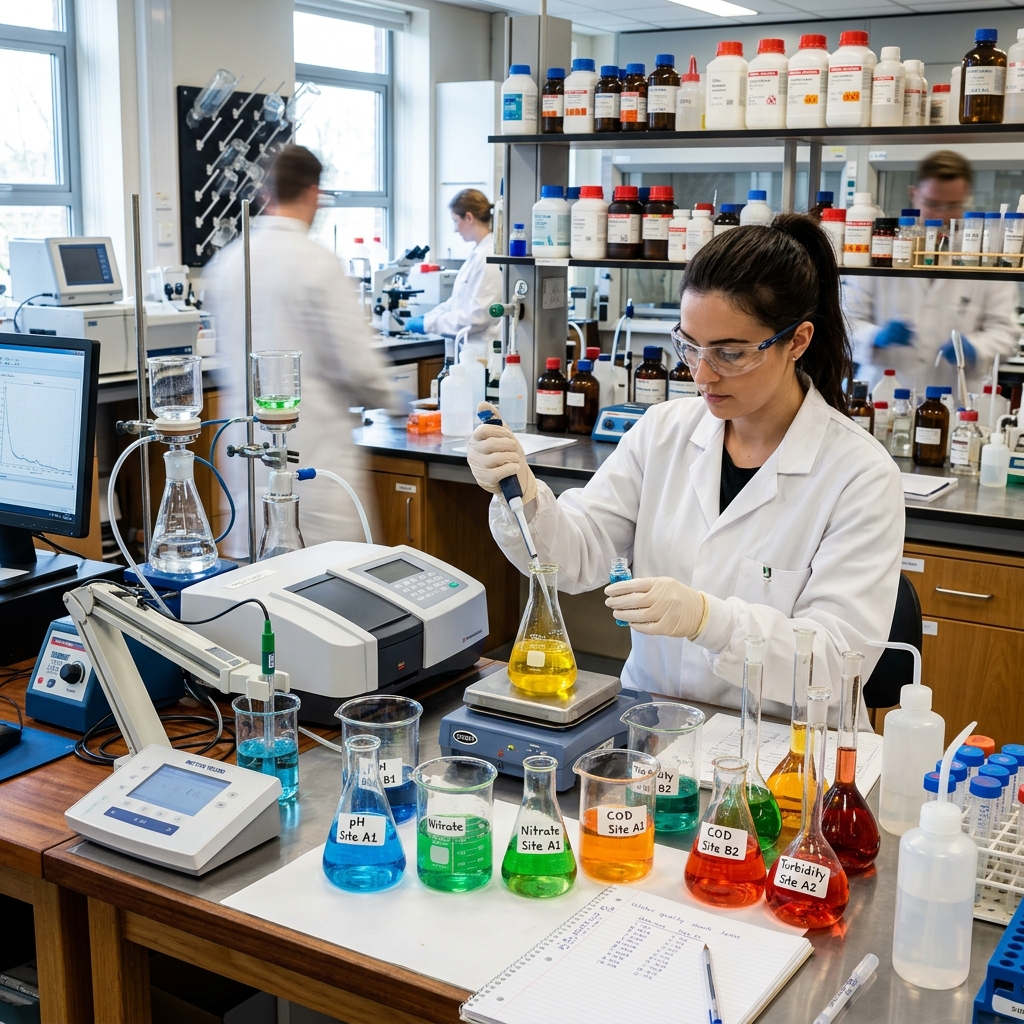
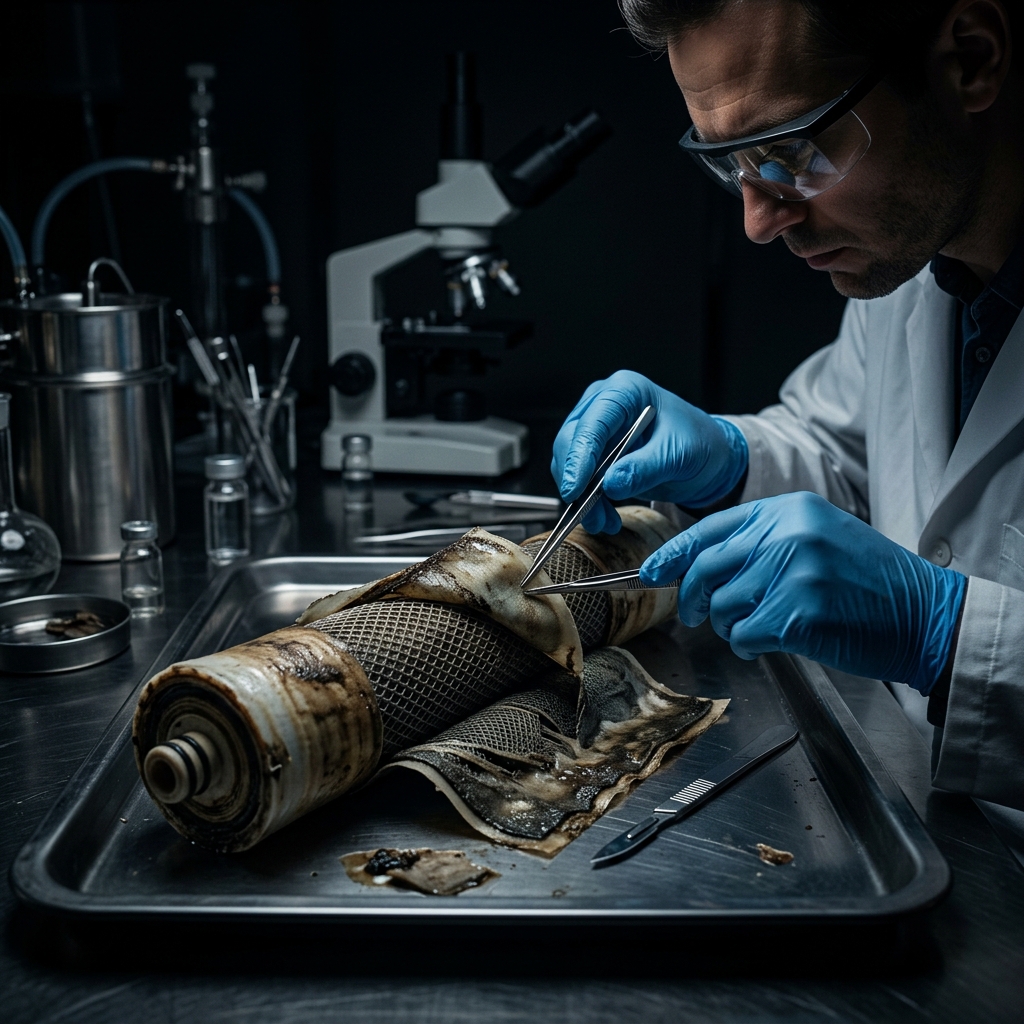
Membrane integrity and autopsy services are critical for identifying the causes of performance decline in RO, NF, and UF systems. At Fenton Technologies, we go beyond simple cleaning by performing deep forensic analysis to detect fouling, scaling, and chemical damage that affects your water quality.
Identify and eliminate membrane issues before they cause system failure. Our comprehensive integrity tests ensure your filtration systems deliver peak performance year-round.
Service Highlights
We offer specialized membrane autopsy services including dye testing, scanning electron microscopy (SEM), and foulant characterization. Our reports provide actionable insights and customized cleaning protocols to extend your membrane lifespan.
- Detailed foulant & scale identification
- Membrane surface & cross-section analysis
- Customized chemical cleaning recommendations
- Mechanical integrity & pressure decay testing

Why Choose Autopsy?
Forensic membrane analysis allows for proactive management of RO systems. By understanding why a membrane failed, we can adjust pretreatment processes and dosing chemistry to prevent future recurrence, saving you significant replacement costs.


Extended Lifespan
Our tailored cleaning protocols can add years to your membrane utility.

Operational Optimization
Improve specific flux and reduce pressure drops through scientific analysis.
Frequently Asked Questions
Everything you need to know about our membrane diagnostic, integrity testing, and performance recovery processes.
A membrane autopsy is a forensic examination of a used membrane element to identify the presence and type of fouling or scaling. It involves destructive physical and chemical testing to understand performance loss.
For critical applications, integrity testing (like pressure decay or vacuum tests) should be performed quarterly or whenever a significant change in permeate quality is observed.
Yes. By identifying the exact foulant, we can recommend a targeted cleaning chemical, avoiding trial-and-error cleaning which often wastes chemicals and damages membranes.
Common signs include increased feed pressure, decreased permeate flow (flux), higher salt passage (conductivity), and discoloration of the permeate water.
Yes, all technical reports and diagnostic data provided by Fenton Technologies are strictly confidential and shared only with the client for operational improvement.